The Function of Prayer: Why It’s More About Us Than the Divine
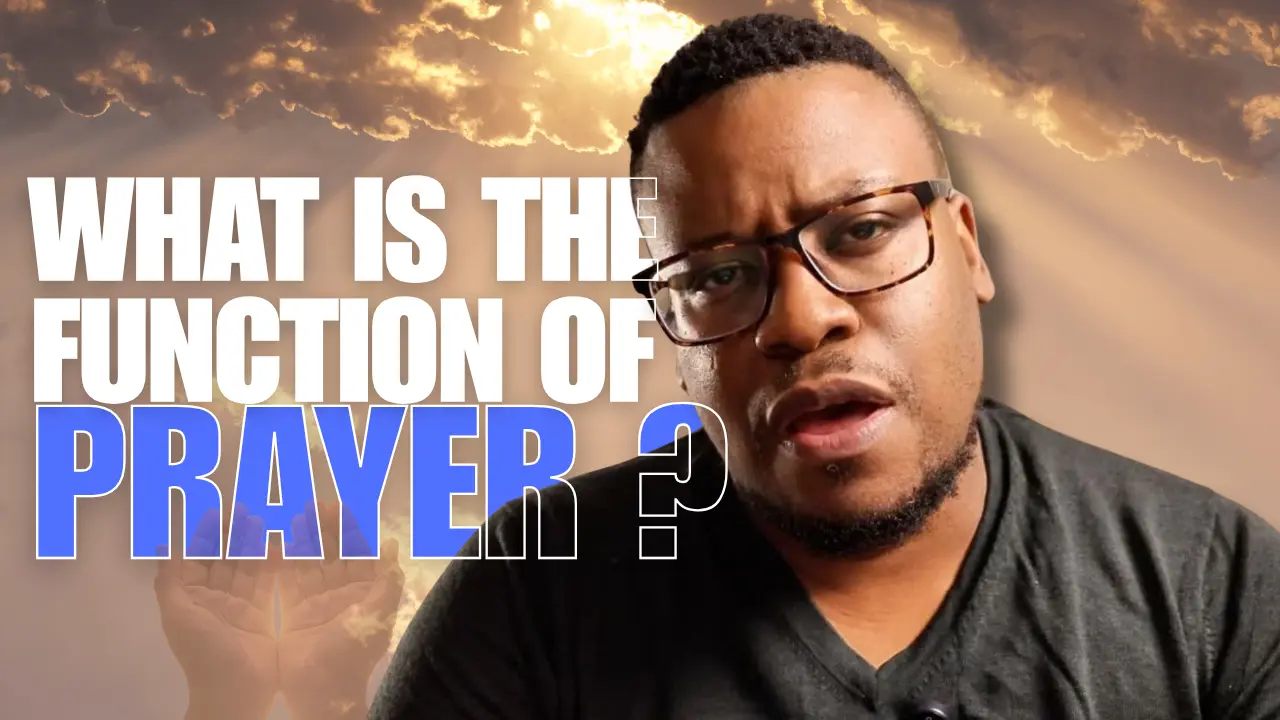
For years, I’ve been fascinated by the core function of prayer. If you strip away the dogma and the specific theology of any tradition, what is actually happening in that moment when a person kneels, bows, or simply closes their eyes and speaks into the void?
I’ve come to realize that the most powerful function of prayer is not to intervene in the world, but to help orient ourselves within it. It’s a mechanism for re-establishing our internal compass when the world feels overwhelmingly chaotic.
This understanding first clicked for me when I recalled a prayer my mother taught me. During any minor crisis—a disappointing test score, a fight with a friend, a moment of deep fear—I would recite: “Oh most sacred heart of Jesus, I place all my trust unto you.” This was invariably followed by her calm, practical voice saying: “It’s not the end of the world.”
That simple combination was a perfect, two-step psychological intervention. The prayer was an act of surrender, a way to externalize the crushing burden of responsibility and fear. Her follow-up was the necessary cognitive restructuring—a direct challenge to the catastrophic thinking that paralyzes us. She was teaching me, without knowing it, how to re-orient myself, proving that the prayer was ultimately for me, not for changing the mind of the divine.
The Overlapping Outcomes of Self-Correction
When you look at the outcomes of consistent prayer, you see strong parallels with modern, secular practices like meditation and cognitive therapy. All three are structured tools designed to pull us out of a reactive, emotional state and re-anchor us in a wider, more stable reality.
- Meditation teaches decentering—the ability to observe thoughts non-judgmentally. This reduces stress and improves emotional regulation, shifting our attention from rumination to the present.
- Therapy, specifically Cognitive Behavioral Therapy (CBT), is built on cognitive restructuring—identifying and challenging the distorted, unhelpful thoughts that govern our mood.
- Prayer facilitates a locus of control shift and provides a structured ritual. When I place my trust in a higher power, I am consciously releasing control over events I cannot manage.
- The result is the same: lower anxiety, clearer perspective, and a renewed capacity to cope.
The Lord’s Prayer as an Orientation Map
To see this principle in action, look at the structure of the Lord’s Prayer (“Our Father”). It’s not just a list of requests; it is a meticulously structured psychological map for self-orientation, moving from the vast to the immediate:
- “Our Father in heaven, hallowed be your name.” (The Anchor): It starts with the biggest picture possible—the transcendent reality. This immediately frames your personal problem against something eternal and stable.
- “Your kingdom come, your will be done, on earth as in heaven.” (Radical Acceptance): This is the ultimate act of surrender and acceptance. It teaches us to release our need to control the universe and embrace a non-striving, “let it be” mindset, a core goal of many contemplative practices.
- “Give us today our daily bread.” (Present Moment Focus): We ask only for what is necessary right now. This grounds us fiercely in the present, preventing the mind from cycling through past regrets or future anxieties.
- “Forgive us our debts, as we also have forgiven our debtors.” (Relational Clean-Up): This is the relational inventory. Before moving forward, we must address our internal guilt and external resentment. It’s a necessary, structured emotional clearance for psychological health.
- “And lead us not into temptation, but deliver us from evil.” (Coping Strategy): Acknowledging human frailty and proactively asking for support in maintaining moral and behavioral strength. It’s the spiritual equivalent of a relapse prevention plan.
The prayer guides the self through an entire process: acknowledging a higher order, accepting reality, grounding in the present, cleansing past hurts, and fortifying for the future.
Whether you call it prayer, mindfulness, or cognitive reappraisal, the function is the same: it is a universal, human tool for restoring perspective. It’s a conscious, structured way to tell yourself:
“The world is bigger than this problem, and I have the tools to place myself back within that framework.”
It’s a dialogue with the divine that fundamentally re-engineers your own spirit.
Be heard MSMES.
At BizInfo Africa, we’re committed to spotlighting the people, data, and deals that prove Africa isn’t high-risk,it’s high-potential.
For more stories, reliable SME and on-the-ground insights?
Visit bizinfo-africa.com. | #BizInfo_Africa
Need credible verification, market entry intelligence, or due diligence in Kenya and across Africa?
Partner with ASAP Information Services: asapinform.com | #ASAP_Inform