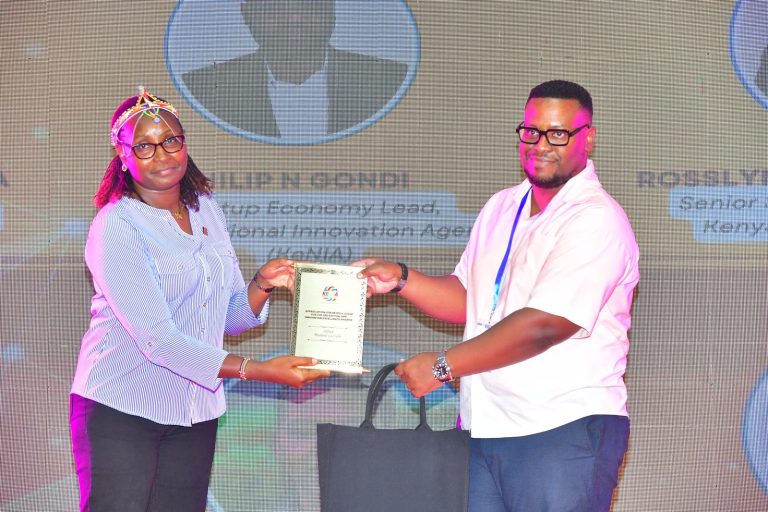

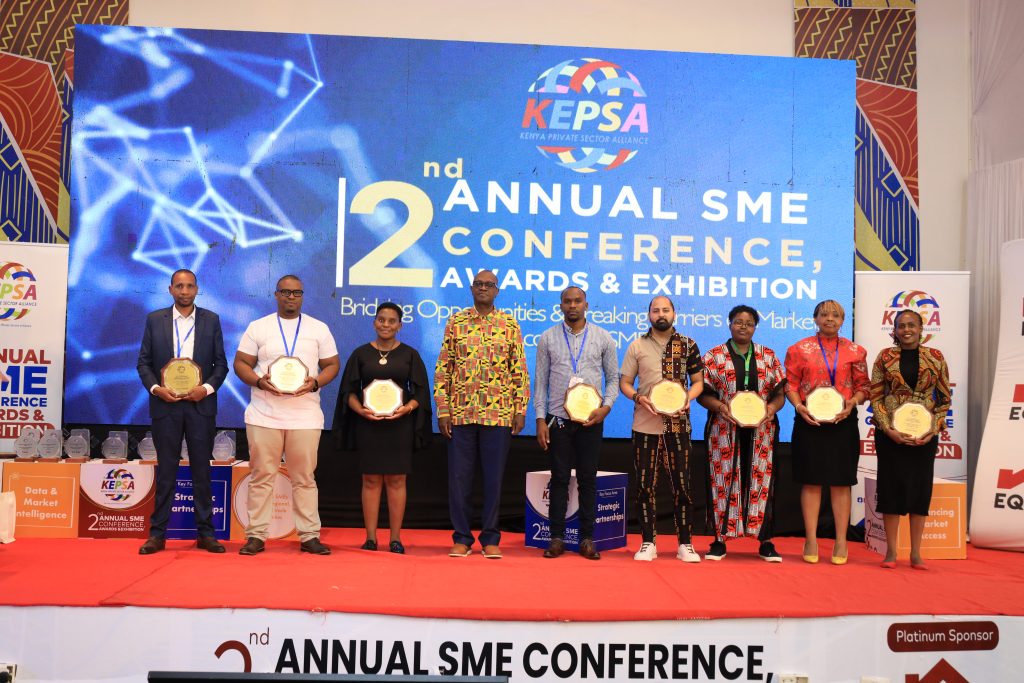
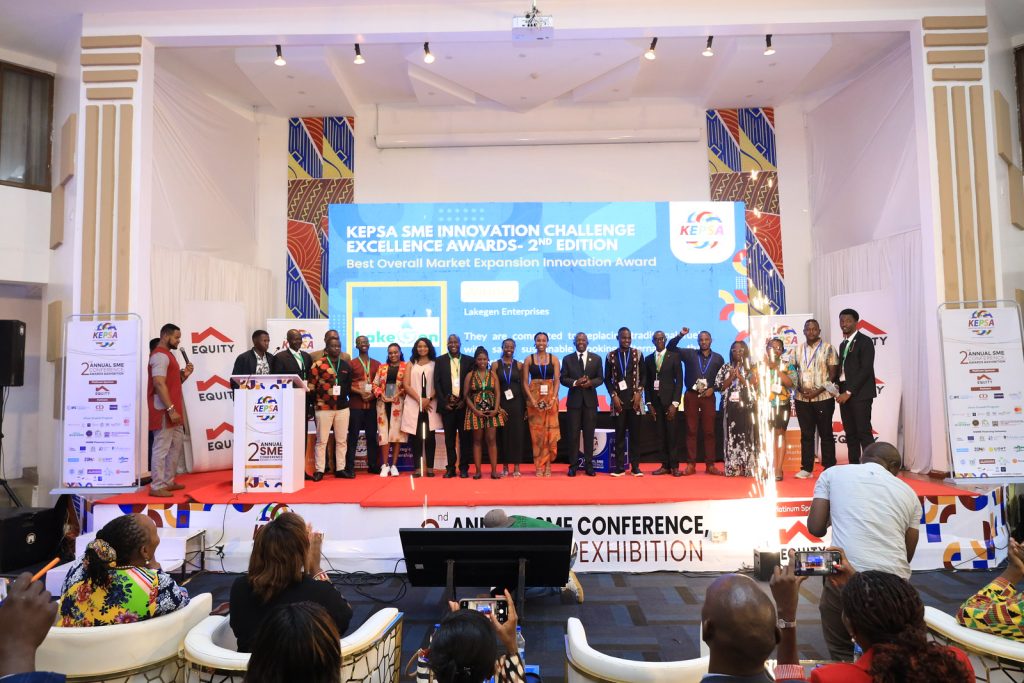
Kenya’s SMEs contribute over 30% of GDP and employ more than 14.9 million people, the majority in informal and micro enterprises (KNBS, 2022). They are widely acknowledged as the backbone of the economy, yet in most conferences, exhibitions and award ceremonies, their voices remain secondary to those of policymakers, corporate sponsors and development partners. Having served as a judge during the KEPSA SME Awards 2025, I had the privilege to engage directly with entrepreneurs. My observation: while the entrepreneurial spirit is undeniably alive, the platforms designed to celebrate SMEs often fail to truly amplify their realities.
Observations from the KEPSA SME Awards
Agripreneurs and Value Addition
Many young entrepreneurs, especially around Nairobi’s outskirts are innovating in agriculture. Yet, value addition within their value chains remains underdeveloped. Most efforts focus on distribution and logistics, not on freezing, storage, or processing produce into shelf-stable products for domestic or export markets (FAO, 2021). This gap is directly linked to Kenya’s persistent post-harvest losses, which average 20–30% annually.Market Research and Iteration
Few SMEs rely on structured market research. Product development often stems from theory, not iterative testing. While agri-tech apps and dashboards are booming, they rarely solve ground-level problems such as byproduct utilization or affordable cold storage.
Food Security and ESG Goals
Strengthening value chains through storage, freezing, and byproduct processing could significantly reduce wastage, contributing to both food security and Kenya’s ESG commitments on sustainable agriculture (World Bank, 2020). It also creates scalable employment opportunities.
Ease of Doing Business
Kenya has made strides in digitizing government services, but bottlenecks remain in licensing, taxation and compliance enforcement (World Bank, 2020). Regional comparisons show Rwanda’s regulatory reforms have eased SME onboarding, while Ethiopia’s horticulture cluster policies have rapidly boosted exports (Ethiopian Investment Commission, 2021).
Harnessing the Harambee Spirit Digitally
SMEs increasingly leverage WhatsApp groups to aggregate products, coordinate logistics and access markets. Smartphone penetration in Kenya now stands at 61% (CAK, 2023), enabling SMEs to deploy chatbots, digital order forms, and e-payment solutions. These tools enhance coordination but require scaling support and digital literacy training.
Policy Implications and Recommendations
- Shift Conference Structures: Allocate more time for SMEs to narrate experiences, challenges and testimonies. Replace sponsor-heavy sessions with MSME-led panels.
- Promote Mid-Value Chain Innovation: Incentivize investments in freezing, processing, and byproduct utilization. Adopt lessons from Nigeria’s aggregator models (Briter Bridges, 2021).
- Embed Market Research Training: Partner with universities and accelerators to provide practical, low-cost market research tools for SMEs.
- Improve Regulatory Environment: Streamline licensing and compliance, drawing from Rwanda’s digital-first approach (RDB, 2022).
- Leverage Digital Harambee: Provide grants and capacity-building for SMEs using digital group tools to aggregate demand and logistics.
- Highlight SME Case Studies: Use platforms such as KEPSA Awards to showcase successful grassroots innovations like Kirinyaga County Women’s Cooperative, which has scaled avocado exports through pooled resources.
Regional Comparisons
- Rwanda: Simplified business registration and e-government platforms have significantly lowered SME barriers.
- Nigeria: Aggregator-led agritech models reduce fragmentation in agricultural markets, enabling smallholder farmers to access broader demand channels.
- South Africa: Cold chain and HACCP-compliant systems allow SMEs to export fresh and processed food at scale.
- Ethiopia: Horticulture cluster strategies integrate farmers into export-ready value chains with direct government support.
Kenya can adopt hybrid learnings: Rwanda’s regulatory ease, Nigeria’s aggregation, South Africa’s compliance and Ethiopia’s cluster strategies.
My Perspective
Kenya does not lack entrepreneurial energy. What it lacks is structured spaces where MSME voices are heard, valued, and acted upon. I’d like to see a shift from top-heavy, sponsor-driven formats toward MSME-centered storytelling and problem-solving, we can ensure that Kenya’s entrepreneurial fire is not only celebrated but sustained.
If MSMEs truly are the lifeblood of the economy, then it is time to put their voices at the heart of the conversation.
Be heard MSMES.
At BizInfo Africa, we’re committed to spotlighting the people, data, and deals that prove Africa isn’t high-risk,it’s high-potential.
For more stories, reliable SME and on-the-ground insights?
Visit bizinfo-africa.com. | #BizInfo_Africa
Need credible verification, market entry intelligence, or due diligence in Kenya and across Africa?
Partner with ASAP Information Services: asapinform.com | #ASAP_Inform