If you drive through Arusha, you can’t miss it. It doesn’t look like a building. It looks like a promise.
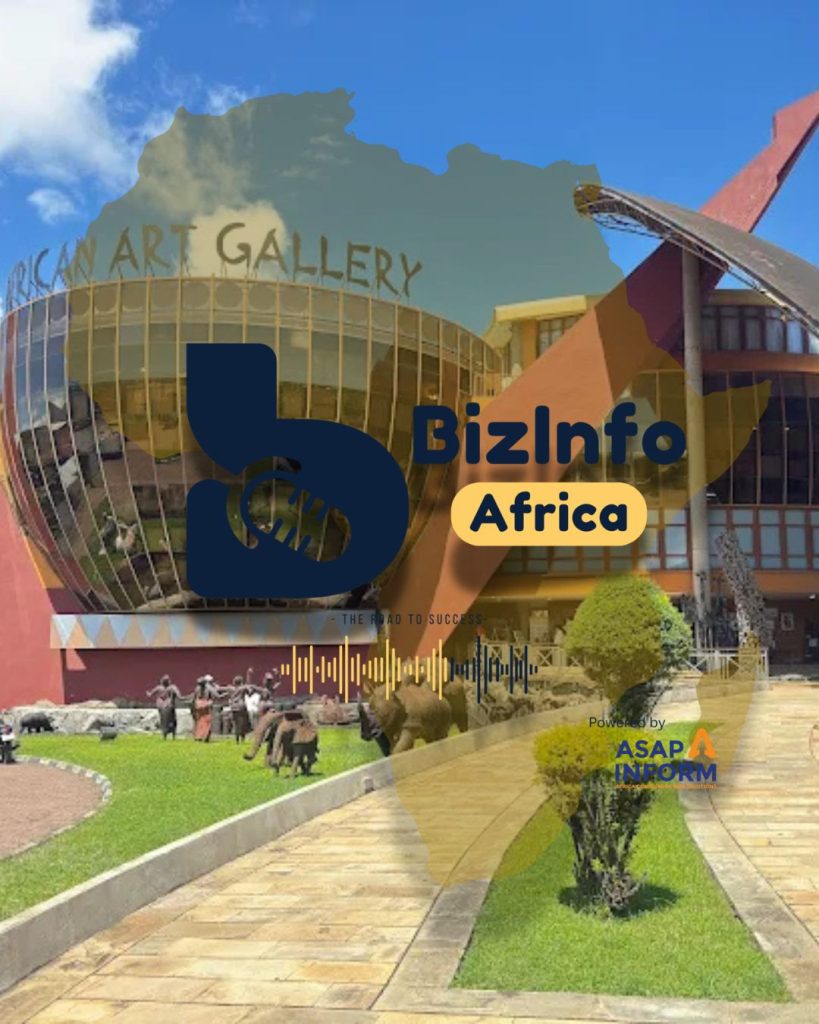
Rising from the dusty earth on the edge of the city, the structure is shaped like a shield and spear anchored by a massive drum. This is the Cultural Heritage Centre, a place that took years of imagining and five years of diligent construction before finally opening its doors in 2010. It is known to be the largest Art Gallery in Africa, housing arguably the biggest collection of African art on the continent.
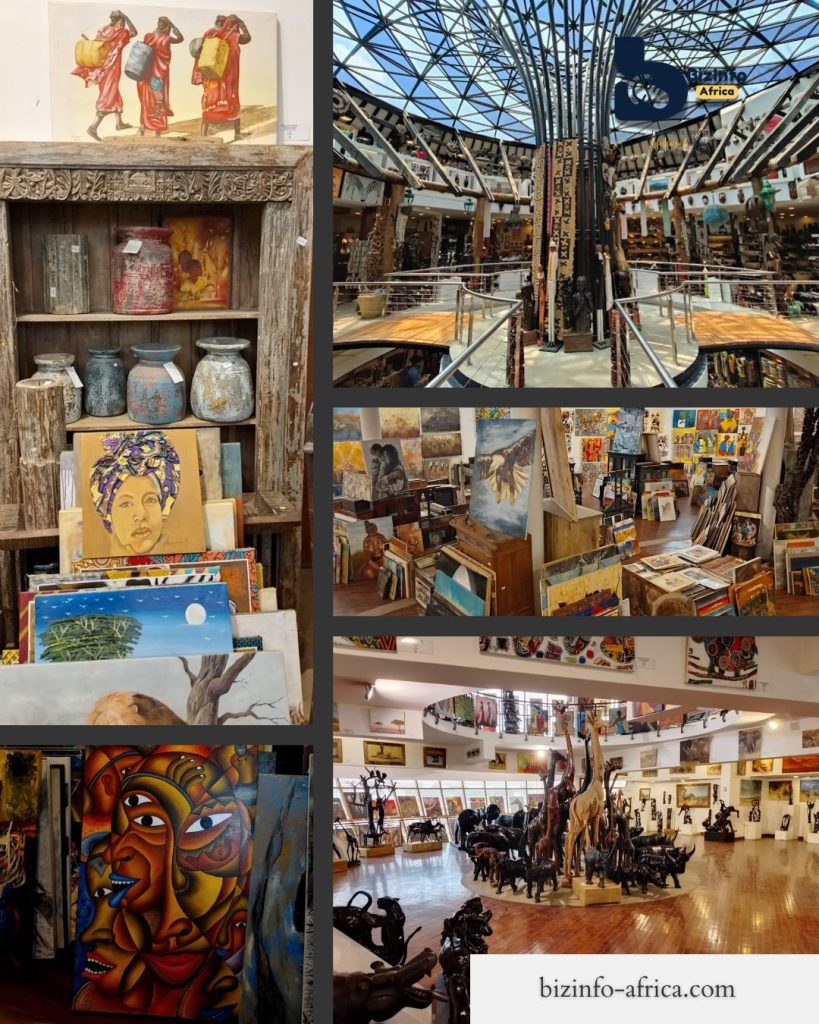
I recently spent an afternoon here, and “gallery” feels like too small a word. It is a Pan-African odyssey. The interior, designed by the Nairobi-based Studio Infinity, is a masterclass in architectural flow. A continuous spiral ramp skirts the heart of the building. It forces you to slow down and let the art wash over you.
For an art lover, it is a paradise. But for me, a Kenyan with roots I am still exploring, it became something much more personal.
Architecture with Intent
The exterior isn’t just for show. The design is a deliberate fusion of three powerful African symbols:
The Spear: Representing survival and strength.
The Shield: Signifying safety and identity.
The Drum: The heartbeat of community and communication.
It sets a tone of reverence before you even step inside. Once you do, the “rhythm and movement” promised by the architects takes over. The space curves and winds, creating quiet corners for reflection.
The Contemporary Masters: Chaos vs. Connection
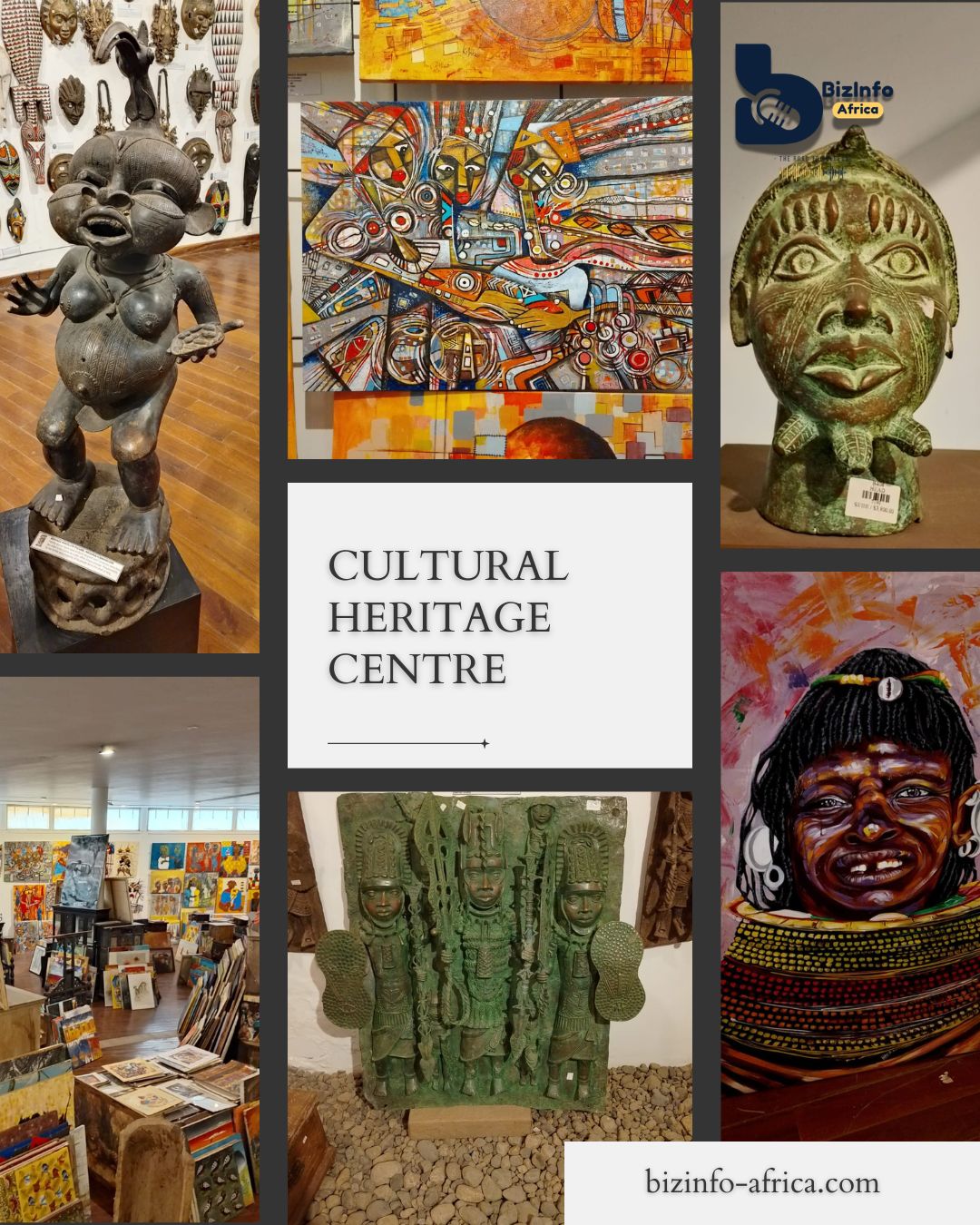
The gallery curates work from across the continent, but two Ugandan artists specifically grabbed my attention. It was the vibrancy that pulled me in. The colors didn’t just sit on the canvas. They demanded to be seen. I found myself immediately mentally redecorating, picturing how these pieces would command a living room or energize a dull office wall.
Their styles are polar opposites, yet they hang in perfect tension.
1. Kibazo Hashib: The Fragmented Reality
Hashib is an academic. He lectures at the university level, and you can see that discipline in his work. His piece, “Beauty Contest,” is a striking example of African Cubism.
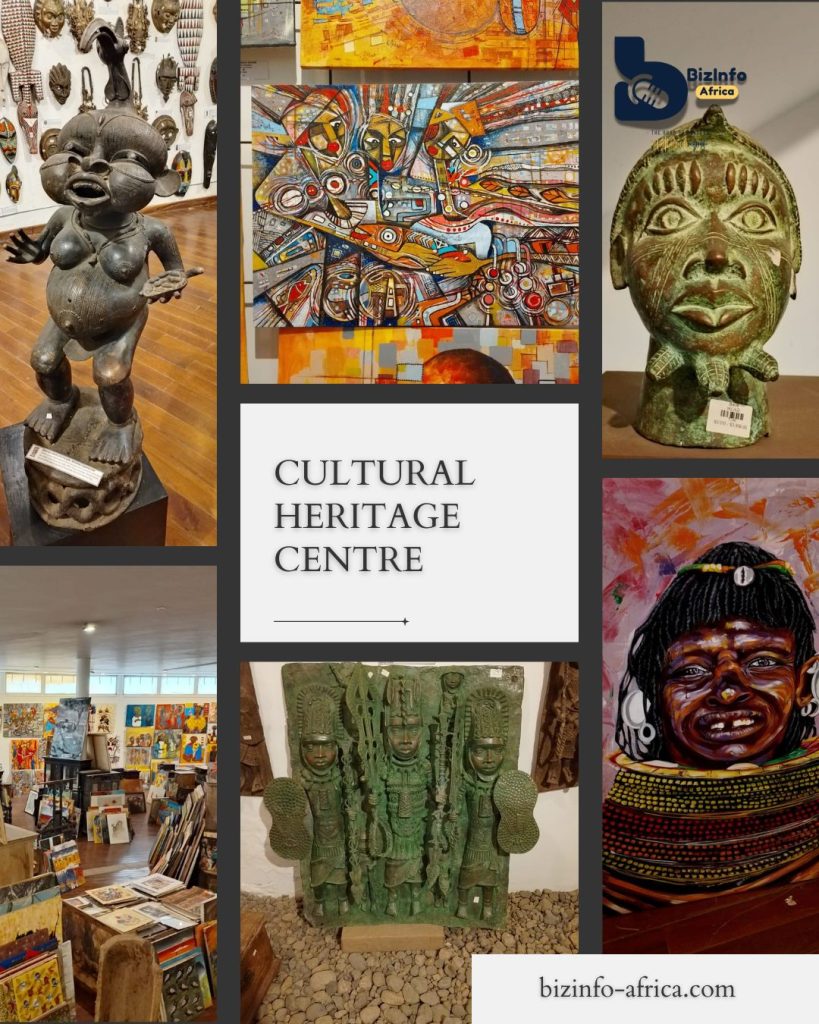
Why it stood out: Hashib creates controlled chaos. He shatters his subjects into geometric shards, using cool blues to clash with warm oranges. If you look closely at the faces, they are split and reassembled. It challenges the viewer to look at “beauty” from multiple angles at once. The inclusion of a fish near the bottom is a classic surrealist touch, grounding the abstract human drama in the natural world.
2. Sudi Kukumba: The Mosaic of Us
If Hashib breaks things apart, Kukumba puts them together. Often called the “African Picasso,” Kukumba’s work is warmer, more fluid, and deeply soulful.
Why it stood out: His work radiates connectivity. In his painting of three figures, likely from his Community series, the bodies aren’t just standing next to each other. They merge. He fills the figures with intricate, cell-like patterns that look almost like a stained-glass window. It gives the canvas a vibrating texture that feels alive.
History Cast in Bronze: The Benin Collection
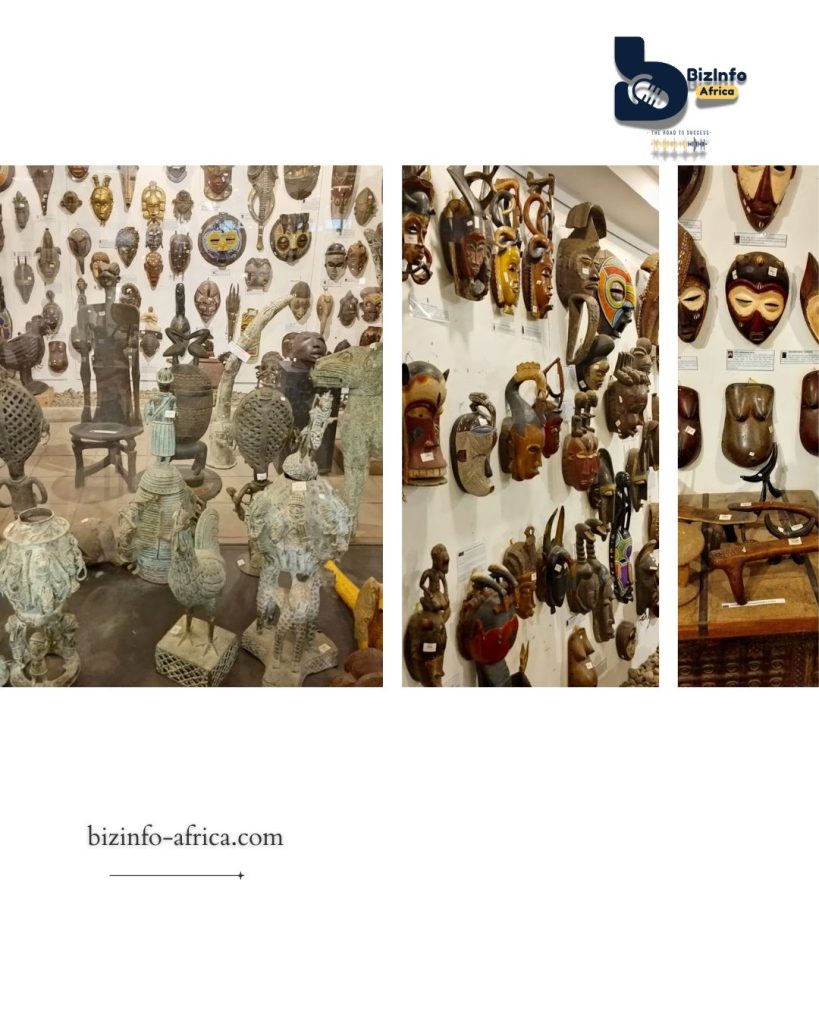
Beyond the canvas, the Centre houses a staggering collection of ethnographic artifacts. You don’t often see works of this caliber outside of major Western museums.
The Benin Bronzes from Nigeria were particularly arresting. I saw a high-relief plaque depicting three warriors holding Eben swords, which were traditionally used for ceremonial dances. I also saw a bronze casting of an Oba (King). The high collar of coral beads on the King isn’t just fashion. Historically, it was a literal shield of wealth and spiritual protection.
Nearby, bulbous wooden figures from the Cameroon Grasslands offered a stark contrast. With massive tongues and wide eyes, they radiated a raw, vital energy that felt worlds away from the stoic bronze warriors.
A Personal Discovery: The Chagga Connection
While the paintings were vibrant and the bronzes impressive, the moment that grounded me happened in front of a large, weathered wooden vessel.
It was a Kiondi, a ritual trough used by the Chagga people of Kilimanjaro.
My story is a common one in East Africa. I am Kenyan and have lived the majority of my life in Kenya. But my mother is Chagga. That half of my heritage has often felt like a distant echo, a story told rather than a life lived.
Standing in front of this vessel, I felt a bridge forming. It triggered a sudden, vivid memory of a trip to my mother’s village at the foot of Mount Kilimanjaro. I recall walking right into the preparation of mbege, the traditional brew. If you haven’t tried it, think of it as halfway between beer and porridge, with a cheeky bit of ethanol whispering from the background. It is primarily made from fermented ripe bananas, and it serves as the social anchor of Chagga life.
This museum piece wasn’t just an object. Seeing the large wooden ladle resting inside, I could almost smell the fermentation again. It was present at births, at marriages, and at peaceful negotiations. It felt like a handshake with a part of my identity I rarely get to see. It was a quiet, grounding moment amidst the grandeur of the gallery.
Why You Should Visit
The Cultural Heritage Centre is more than a souvenir stop on the way to the Serengeti. It is a place where the “Spear” and the “Shield” protect the “Drum.”
Whether you are looking to invest in serious contemporary art like Kukumba’s, or you are like me, searching for a reflection of yourself in the artifacts of your ancestors, this place demands your time.
Travel Tips:
Location: Arusha, Tanzania (on the outskirts of the city).
Time: Allow at least 2 hours to walk the spiral ramp properly.
Photography: They are usually strict about photography in the main gallery to protect artist copyright, so ask for permission or focus on the exterior.
Have you visited the Cultural Heritage Centre? Let me know in the comments if you leaned more towards the abstract cubism of Hashib or the fluid lines of Kukumba.
Acknowledge the True Scale, Claim Your Global Standing.
At BizInfo Africa, we’re committed to spotlighting the people, data, and deals that prove Africa isn’t high-risk,it’s high-potential.
For more stories, reliable SME and on-the-ground insights?
Visit bizinfo-africa.com.
Need credible verification, market entry intelligence, or due diligence in Kenya and across Africa?
Partner with ASAP Information Services: asapinform.com | #ASAP_Inform