Short answer
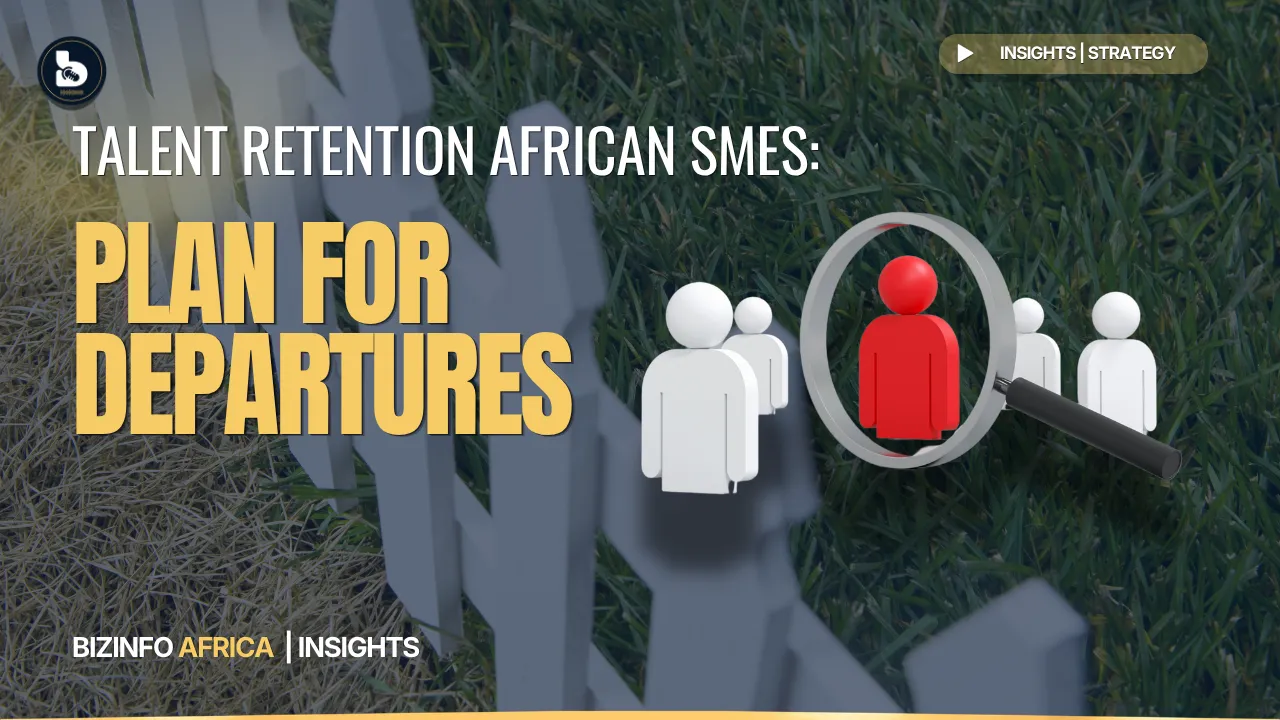
Talent retention in African SMEs fails when founders treat retention as the whole plan. Your best people will eventually leave, to start ventures, join multinationals or move abroad. Plan for it: map skills, cross-train, name an understudy for each vital role and keep a continuity plan that lets you absorb the exit and keep moving.
40
African countries with significant health staffing shortages, per WHO 2023.1
~500
nurses a month lost by Ghana, per the same review.1
65%
of Egypt's roughly 9,000 yearly medical graduates work abroad.1
Why does talent retention in African SMEs need a second plan?
Because the grass is almost always greener somewhere else. Equity, culture and purpose help. They don't make anyone permanent.
The biggest founder mistake is building a company that depends on heroic, irreplaceable individuals. It works until the day a department head hands in a resignation letter. Then it doesn't.
Departure is documented at scale in some professions. A 2024 LSE analysis cites WHO figures showing 40 African countries with significant health staffing shortages, Ghana losing roughly 500 nurses a month and 65% of Egypt's roughly 9,000 annual medical graduates working abroad.1 The same piece notes remittances to Africa reached £80 billion in 2022, so emigration isn't a pure loss for the continent.1 It is a loss for the employer who's left holding the empty chair.
One gap to be honest about. I couldn't find a Kenyan or pan-African study of staff turnover in SMEs specifically, and the LSE author calls for better industry-level data. The case for planning rests on these sector figures and on practice.
What does it mean to plan for talent to leave?
My take is simple: always plan for talent to leave. Accepting that changes how you manage. You stop scrambling at resignation and start building systems that identify, develop and motivate people continuously from within.
What does a practical departure plan include?
- Skill mapping and cross-training. No critical process should live in one person's head. Document workflows. Train others on them so nothing bottlenecks around a single individual.
- A backup resource. Cultivate an understudy for every vital role. When the primary person moves on, the backup steps up without a gap.
- Adaptive leadership. Speed is an SME's main competitive advantage. Your continuity plan should let you absorb the blow, adapt fast and keep moving.
Which roles should you cover first?
Start where an exit would stop revenue or compliance: the person who holds client relationships, the person who runs payments and reconciliation, the person who understands your systems. Ask one question for each: if they resigned on Friday, what breaks on Monday?
Build a company that works regardless of who is sitting in the chair.
Talent cultivation isn't only about keeping people happy. It's about building a resilient machine.
Frequently asked questions
What is key person risk?
It's the risk that a critical process, relationship or skill lives in one person's head. When that person leaves, operations stall.
How do you reduce dependence on one employee?
Document workflows, cross-train team members and name an understudy for every vital role, so someone can step up when the primary person moves on.
Can equity and culture stop key staff from leaving?
Not reliably. Strong employees may start ventures, join well-funded multinationals or relocate abroad. Plan for departure instead of assuming retention.
Is skilled emigration from Africa really that large?
In health it is well documented: WHO figures cited by LSE show 40 African countries with significant staffing shortages and Ghana losing about 500 nurses a month. Data on SMEs specifically is thin.
What should a business continuity plan cover for talent loss?
Who covers each role, where the documentation lives and how fast the business can absorb the exit and keep moving.
The sector figures come from a secondary source (an LSE blog analysis) and cover health and engineering, not SMEs generally. This is an opinion drawn from practice, not a labour-law guide.
Sources
General information only. Not financial, tax or legal advice. Figures are as reported by the cited sources on the publication date; verify before acting.