
Red Earth & First Ambitions
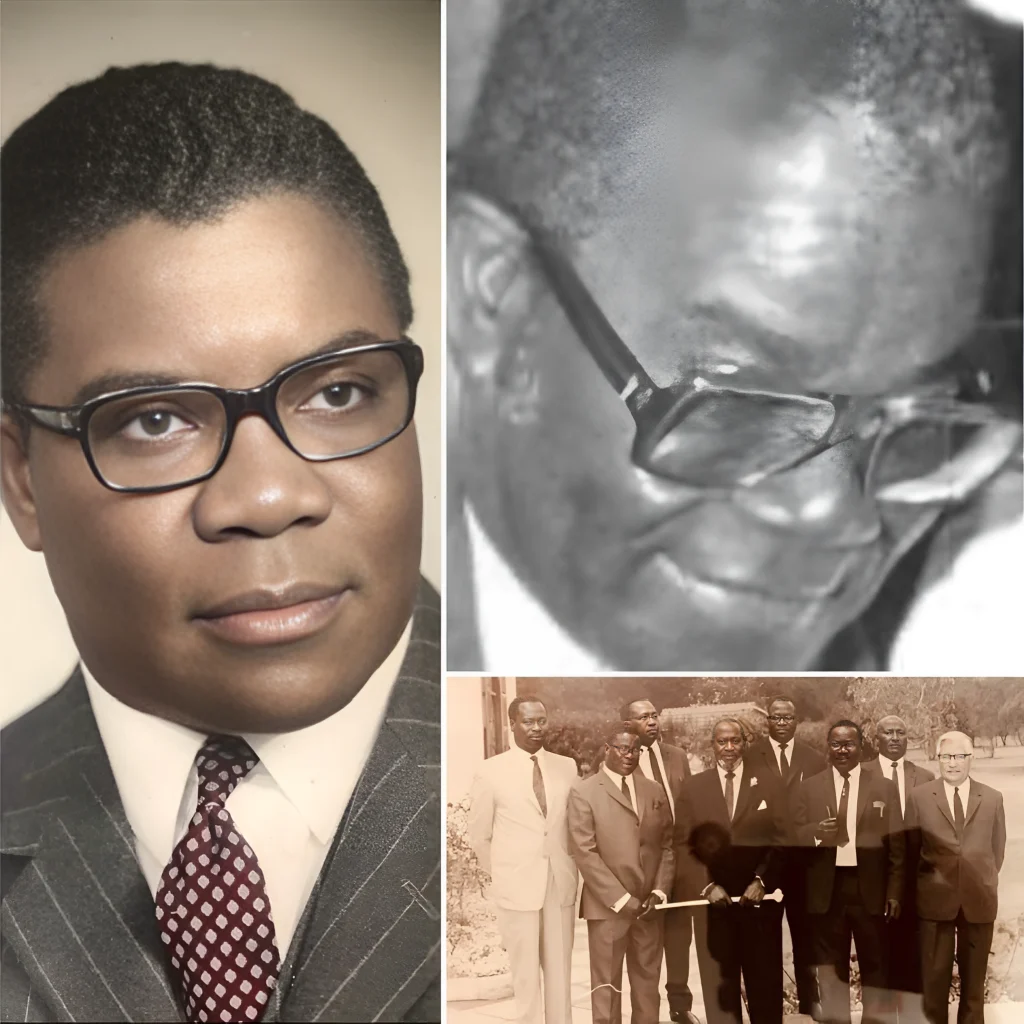
Not far from the clay-red bends of the River Yala lies the village of Ematundu in today’s Khwisero sub-county. On 14 August 1929, while the British flag still hung heavy over the Western Province, a boy called Jesse Eshikhati Opembe arrived in a wattle-and-daub house that looked much like every other. From that soil—fertile, stubborn, demanding—he drew the early lesson that nothing moves unless someone, somewhere, pushes.
Primary school at Kakamega Government African School opened his eyes; Form II closed his wallet. Fees ran out; dreams did not. At seventeen he was already an itinerant clerk, moving sacks of maize through fly-blown stores owned by the Nyanza Province Marketing Board (NPMB). The ledgers were colonial; the handwriting inside them was African.
The Clerk Who Learned Power’s Grammar
A clerk’s desk in 1940s Kisumu provided no map to power, but it did offer a vantage point. He watched how store managers spoke upward to Nairobi and downward to porters, and how a well-timed memorandum could shift an entire convoy of grain. He also watched how African staff were dismissed with little more than a grunt.
So Opembe began to agitate. He organised the NPMB’s African workers, was elected shop-steward, and—when management tried to silence him—took the harder route of exams at night, winning promotion first to Senior Stores Clerk, then Accounts Officer, and finally Assistant Public Relations Officer in 1958—the first African in East Africa to hold such a title.
Public Relations was still an imported phrase, its utility unproven on Kenyan soil. Opembe treated it not as window dressing but as leverage. “Information,” he liked to say, “is capital one spends before one spends money.” Colleagues recall a habit—pure Caro’s Lyndon Johnson—that he never ended a conversation until he had extracted a commitment.
The Maize Crisis & The Emergence of a Fixer
In 1965 drought shrank the harvest, silos emptied & Nairobi shivered at the prospect of bread riots. The newly independent government needed a fixer who understood both grain logistics and the politics of hunger. They turned to Opembe—by then Deputy General Manager of the Nationalised Maize & Produce Board.
He imposed a relentless Management-By-Objectives regime: daily tonnage targets, surprise midnight depot inspections, and what younger officers called “the map”—a wall-sized chart of every rail spur, truck route and village store in the Rift Valley. In 18 months the board swung from a KSh 4.2 million deficit to profitability, a turnaround that remains unsurpassed half a century later.
Inventing a Profession—The Public Relations Society of Kenya
Kenya was flush with new ministries, new parastatals—and a cacophony of official voices. In 1970, convinced that the republic needed a disciplined cadre of communicators, Opembe led six restless colleagues—Isaac Lugonzo, Patrick Orr, Michael Dunford, James Smart, Muthoni Likimani and Colin Church—into a cramped boardroom off Nairobi’s Moi Avenue. They emerged with the charter of the Public Relations Society of Kenya (PRSK).
By 1973 Opembe was chairman, a post he would hold for nine rigorous years. He imported standards from the British Institute of Public Relations, drafted a code of ethics & lectured nightly at the Kenya Institute of Mass Communication, insisting that his students master “the obligation to explain.” Membership rose from 37 to more than 300; the idea of public relations as a Kenyan profession ceased to be laughable.
International plaudits followed. Mexico City (1975): he addressed the IPRA congress and left with its Golden Medal, conferred by Queen Elizabeth II’s envoy. Lagos (1975): FAPRA named him a Fellow. Nairobi (1978): 3,000 delegates at Africa’s largest-ever PR meeting rose when he entered the hall; a few journalists noted he walked as though “carrying a confidential brief the nation had yet to read.”
Sugar, Cash-Crops & the Geography of Ambition
Power, Robert Caro writes, finds fresh fields to irrigate. In 1972 Agriculture Minister Jeremiah Nyagah asked Opembe to build a regulatory authority for sugar—then a chronically under-supplied, strike-plagued industry. With two staff, one desk and no budget, he created the Kenya Sugar Authority, negotiated factory licences for Mumias, South Nyanza and Nzoia, and massaged feuding millers into a single export-pricing pool. By the late 1970s Kenya’s annual output had tripled, edging the country toward the self-sufficiency target he set for 1982.
Parliament—A Brief, Tumultuous Coda
Politics, inevitably, beckoned. In the one-party KANU primaries of 1988, he toppled the formidable Martin Shikuku to capture the Butere seat—proof, local pundits said, that in politics persuasion mattered more than party money.
At the Planning & National Development docket he pushed for a national communications strategy that would fuse development statistics with plain language—“Budgets are wasted,” he warned, “because citizens do not know what is being done in their name.” But the marathon life ended in a sprinter’s burst: on 1 October 1988, aged fifty-nine, Jesse Eshikhati Opembe died after a short illness, leaving a constituency stunned and a profession orphaned.
Legacy—The Quiet Grammar of Nation-Building
Today, every Kenyan ministry employs communications officers; every listed company issues investor briefings; every county budget includes a public-participation line item. The structures look inevitable—until one remembers a time when the word public rarely shared a sentence with the word information.
To visit Ematundu now is to see sugar-cane trucks rumble past newly tarred roads and to hear school children debate career choices that include mwandishi wa mahusiano ya umma—public-relations officer. Jesse Opembe could have predicted the phrase; he might have smiled at the cadence.
He understood, as has been written of other giants, that power is neither good nor bad; it is only what its holder decides it shall be. Opembe decided it would be explained. That, more than any office he held, is the biography he wrote in the life of a young republic—and the one we read every time Kenya chooses words before actions, because it knows the two must travel together.
Key citations
- Early life & NPMB career gssrr.org
- NPMB founding context Kenya Law
- PRSK registration & Opembe’s chairmanship prsk.co.kegssrr.org
- Sugar Authority stats ResearchGate
- Sugar-sector academic review MSU Libraries
- Economic-Survey maize figures Kenya National Bureau of Statistics
- FAPRA/APRA origins The Museum of Public Relations
- 1988 Butere upset (Standard & AllAfrica) The StandardallAfrica.com
- LA Times voter-margin note Los Angeles Times
- Wikipedia electoral chronology Wikipedia
- Probate notice confirming marriage Gazettes Africa