Short answer
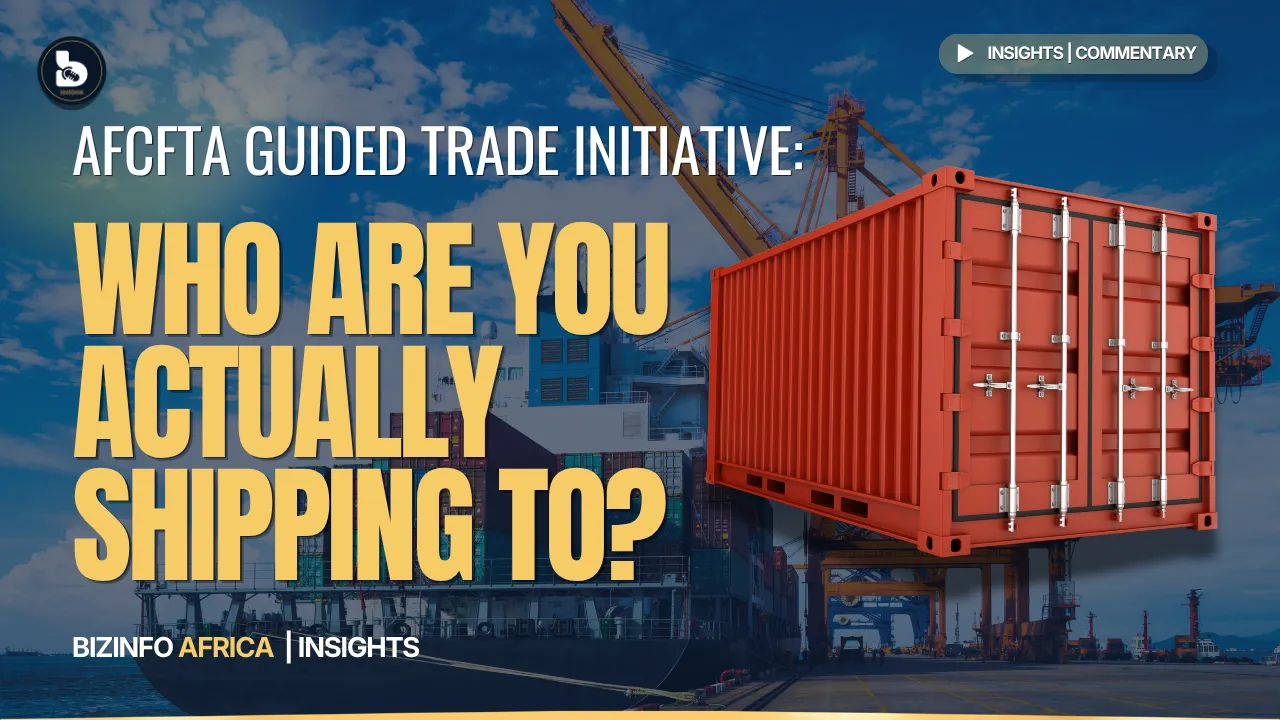
The AfCFTA Guided Trade Initiative started in October 2022 with eight countries and had grown to 39 by September 2024. It tests tariffs, certificates of origin and customs on real shipments. It doesn't test the buyer. With Afreximbank putting Africa's annual trade finance gap at US$80 billion to US$120 billion, the credit and counterparty risk of a first shipment usually lands on the trader.
39
countries in the GTI by September 2024, up from 8 at launch.
$220bn
intra-African trade in 2024, up 12.4%.
18%
of African banks' trade finance portfolios back intra-African trade.
What is the AfCFTA Guided Trade Initiative?
It's the pilot that turned the free trade agreement into actual shipments. The AfCFTA Secretariat launched it on October 7, 2022 with eight countries chosen to represent the five African Union regions: Cameroon, Egypt, Ghana, Kenya, Mauritius, Rwanda, Tanzania and Tunisia.1 Its stated aim was to test the operational, institutional, legal and trade policy environment under the agreement.2 By September 2024 the Secretary General said participation had grown from 7 to 39 countries.3
The early shipments were small and specific. Kenya sent AfCFTA-certified car and truck batteries to Ghana, at roughly US$60,000 a container, along with a consignment of tea.4
How much trade has it actually moved?
Less than the headlines suggest. Intra-African trade reached US$220.3 billion in 2024, up 12.4%, and Afreximbank credits early AfCFTA implementation for part of that.5 But one 2026 market report calls the GTI's volumes modest and says its significance has been demonstrative more than commercial.6
A 2026 tracker reports more than 12,000 certificates of origin issued by March and the Pan-African Payment and Settlement System (PAPSS) live in 28 countries. It also says textiles and automotive rules of origin remain stuck.7 I'd treat those figures as indicative until they're confirmed against Secretariat data.
Where does the risk sit once the paperwork works?
On the trader. Afreximbank's 2026 African Trade Report puts the annual trade finance gap at US$80 billion to US$120 billion and says SMEs still struggle to get finance.89 Only 18% of African banks' trade finance portfolios support intra-African trade, because the book leans toward external markets.10
Tariffs and certificates can be fixed by a Secretariat. Whether the buyer in Douala or Dar es Salaam pays you in 60 days is not on any Secretariat's checklist. It's weird that a continental trade pilot spends so much effort on the document and so little on the person signing it.
A registration number proves a company was formed. It doesn't prove the company is trading, solvent or owned by who it claims.
What should an exporter check before the first shipment?
After 16 years of vetting Kenyan SMEs, this is the short list I'd run on any new cross-border counterparty before shipping on credit or sending a deposit. It's my checklist, not an AfCFTA requirement.
- Legal existence. Confirm the registration at the source registry, not from a PDF they sent you.
- Owners and directors. Who actually controls it, and do they match what you were told?
- Trading status. Is the business operating this month? A physical confirmation beats a website.
- Litigation and adverse records. Court cases, defaults, regulatory trouble.
- Payment behaviour. Trade references and, where it exists, bureau data.
- The payment route. Letter of credit, advance payment, or PAPSS where both banks are connected.
- Screening. Sanctions and politically exposed persons, for the company and its owners.
Match the depth of the check to the size of the exposure. A US$60,000 container deserves more than a LinkedIn look.
What should you watch next?
Three things. Whether GTI participation turns into measurable volume. Whether PAPSS reach grows beyond the 28 countries one tracker reports.7 And the Intra-African Trade Fair: Nigeria has signed the host agreement for the fifth edition, set for November 5 to 11, 2027.11 Exactly a year from now, expect plenty of new counterparties looking for introductions.
Know your readiness, then know your buyer
The AfCFTA Export Readiness Index covers ten pillars: customs, rules of origin, payment, logistics and counterparty risk. Thirty-nine questions, about 11 minutes.
When the counterparty is the one you can't see, a Business Information Report covers verified registration and ownership, trading status, directors, litigation and adverse records, payment behaviour and physical confirmation that the business operates. Commission it before you ship on credit.
Frequently asked questions
What is the AfCFTA Guided Trade Initiative?
It's a pilot launched by the AfCFTA Secretariat on October 7, 2022 to test trading under the agreement on real shipments. It checks tariffs, rules of origin, certificates and customs procedures between participating countries.
Which countries were in the first phase?
Cameroon, Egypt, Ghana, Kenya, Mauritius, Rwanda, Tanzania and Tunisia. By September 2024 the AfCFTA Secretary General said 39 countries were participating.
Does the Guided Trade Initiative guarantee payment?
No. Its stated aim is to test the operational, institutional, legal and trade policy environment, not to assess buyers' creditworthiness. Counterparty and payment risk stay with the trader unless financing or insurance covers it.
What is PAPSS?
The Pan-African Payment and Settlement System, developed by Afreximbank with the AfCFTA Secretariat and the African Union. It lets payments settle in local currencies, which reduces reliance on the dollar and euro for intra-African trade.
Sources
- Africa Business Communities: 8 African countries kick-start free trade with 96 products
- Africa Trade Foundation: The AfCFTA and its Guided Trade Initiative
- Afronomicslaw: The Guided Trade Initiative, an appraisal of AfCFTA national implementation vehicles
- African Liberty: Leveraging the AfCFTA Guided Trade Initiative for national economic growth
- Ecofin Agency: Africa's trade grows 13.9% in 2024 driven by AfCFTA progress
- ABA Editorial: AfCFTA Implementation 2026, the Guided Trade Initiative and the slow reality of integration
- Rio Times: African Union trade deal tops $220 billion as AfCFTA tariffs cover just 25 countries
- Citi Newsroom: Intra-African trade faces US$120bn annual finance gap, Afreximbank report
- Zawya: Afreximbank banks on intra-African trade
- Zambia Monitor: Afreximbank warns of $100 billion trade finance gap
- AllAfrica: Nigeria signs Intra-African Trade Fair 2027 host agreement
General information only. Not financial, tax or legal advice. Figures are as reported by the cited sources on the publication date; verify before acting.