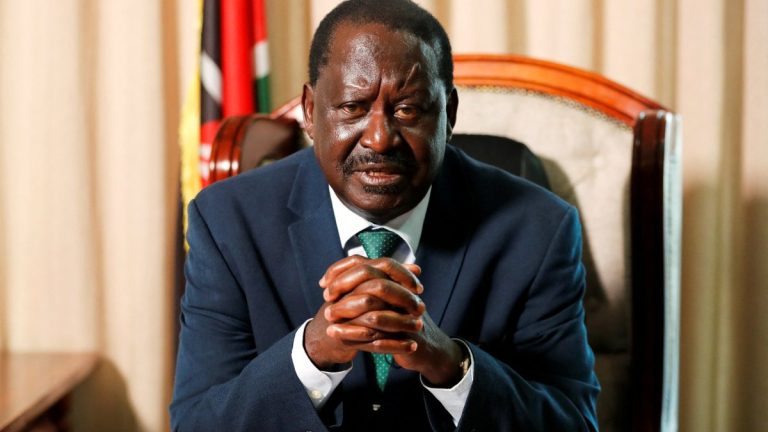

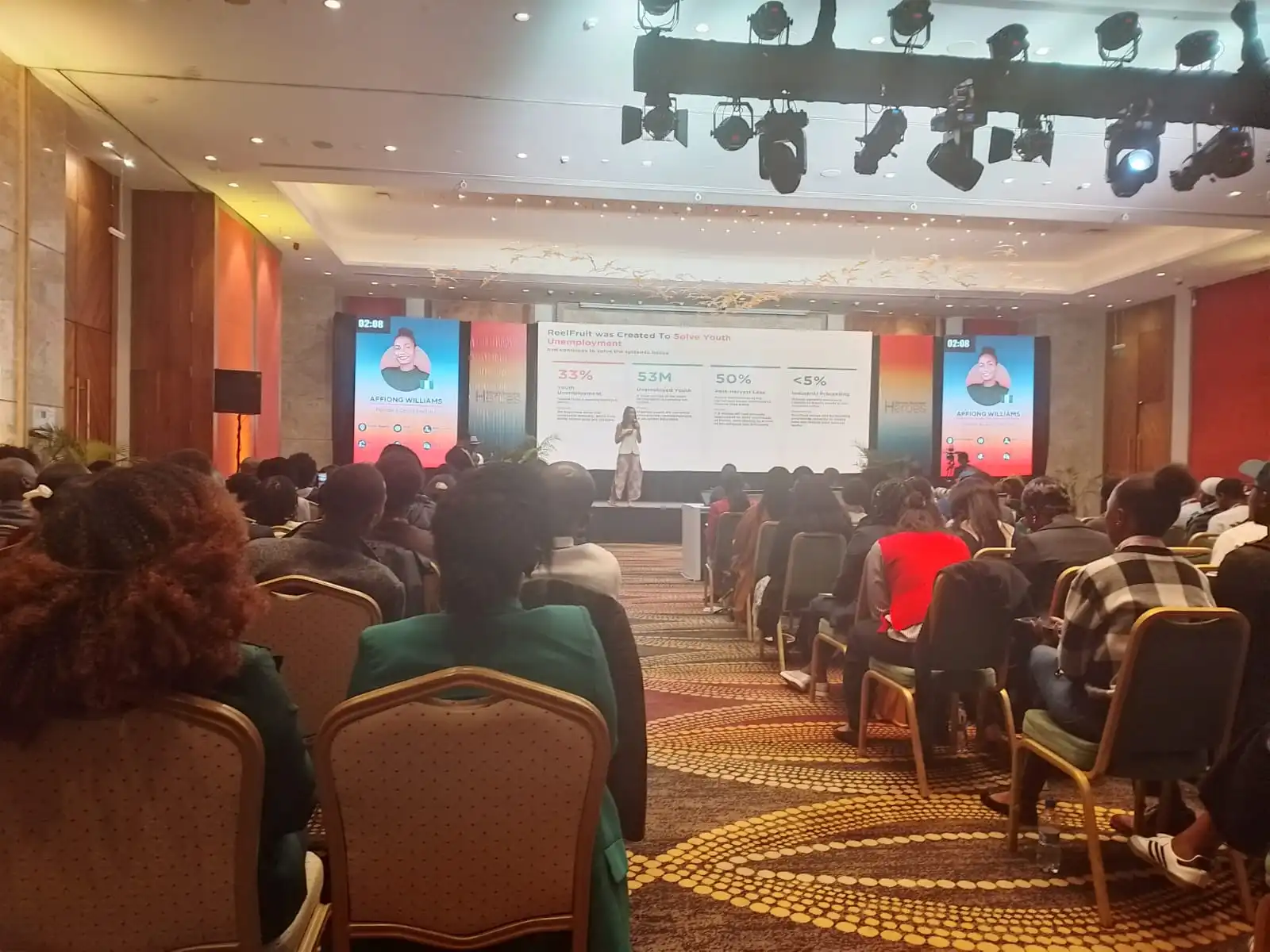
I attended the Africa's Business Heroes 2026 Semi-Finals in Nairobi for the first time. I came in late for the afternoon pitches, so this is not intended as a comprehensive account of the competition. What I saw, however, was enough to leave me with several observations about entrepreneurship, investment readiness and what happens when a good business story is subjected to serious scrutiny.
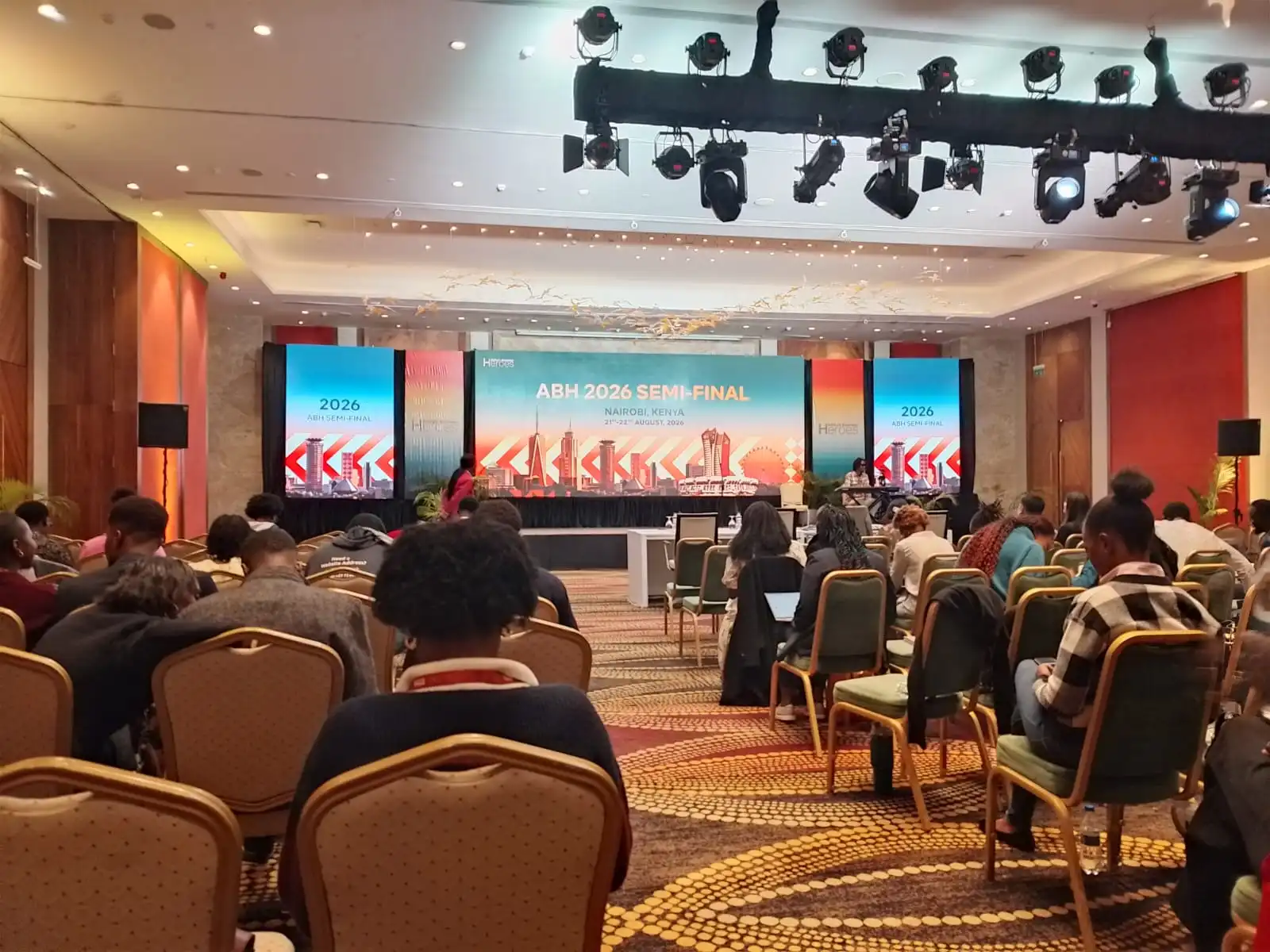
My first impression was the audience.
It was young.
There was an energy in the room that I found encouraging. Whatever challenges we continue to discuss around entrepreneurship in Africa, access to capital, regulation, skills, infrastructure and markets, the entrepreneurial spirit itself appears very much alive.
I also happened to meet two young women building interesting businesses around children and learning.
One is working in robotics and digital learning, teaching children to code but also giving them opportunities to apply what they learn practically. The connection between coding on a screen and actually building something matters. These are potentially the engineers, designers and technical problem-solvers Kenya will need in the future.
The other entrepreneur is working in children's edutainment, creating curated experiences built around both fun and learning.
Two completely different businesses, but both were reminders of the breadth of entrepreneurship taking place beyond the sectors that usually dominate conversations about African startups.
Four minutes to pitch. Then the real conversation starts.
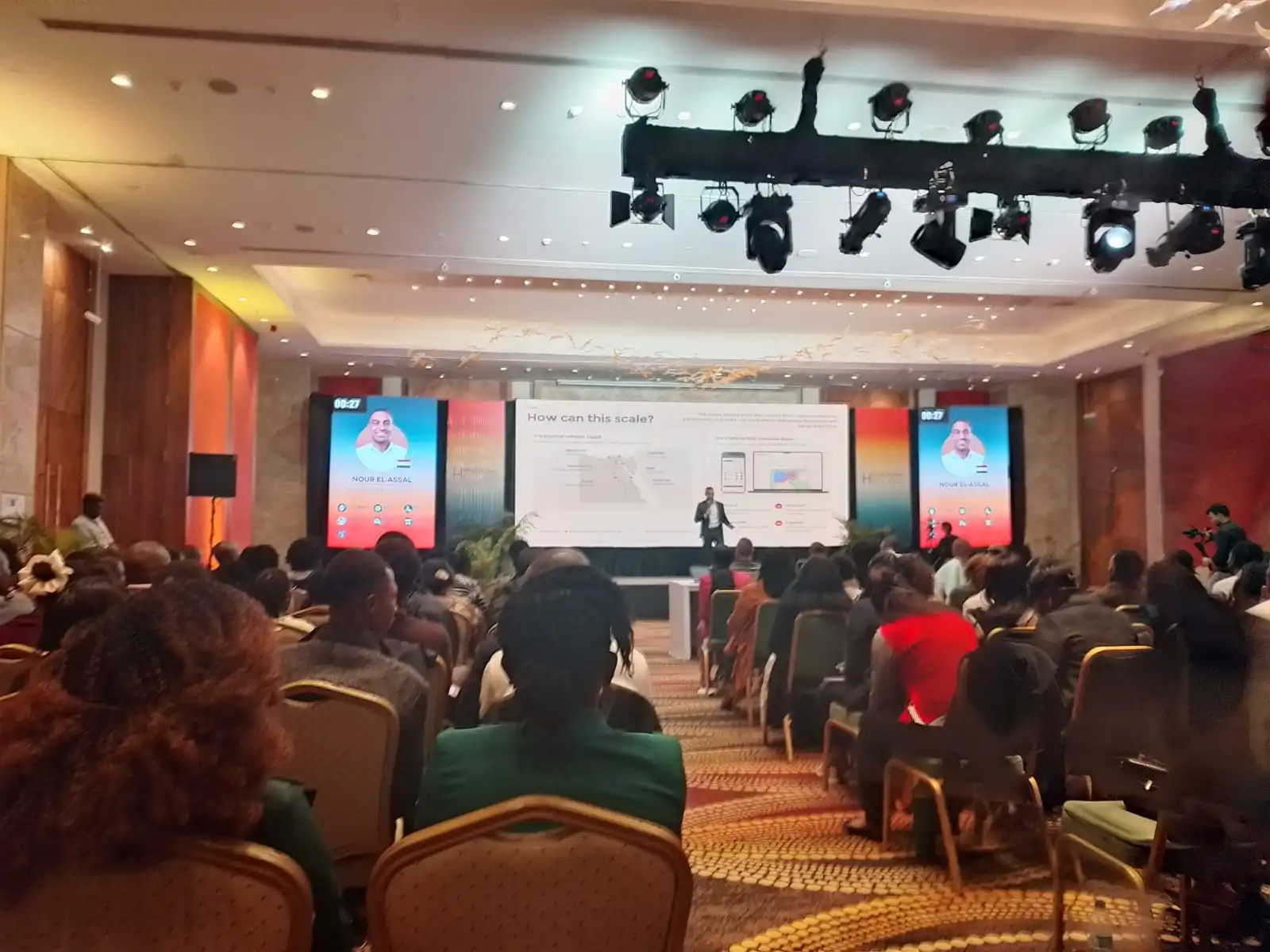
The entrepreneurs had only a few minutes to introduce their businesses. That is enough time to explain the problem, introduce the solution, establish the purpose of the company and convince the room that there is something worth paying attention to.
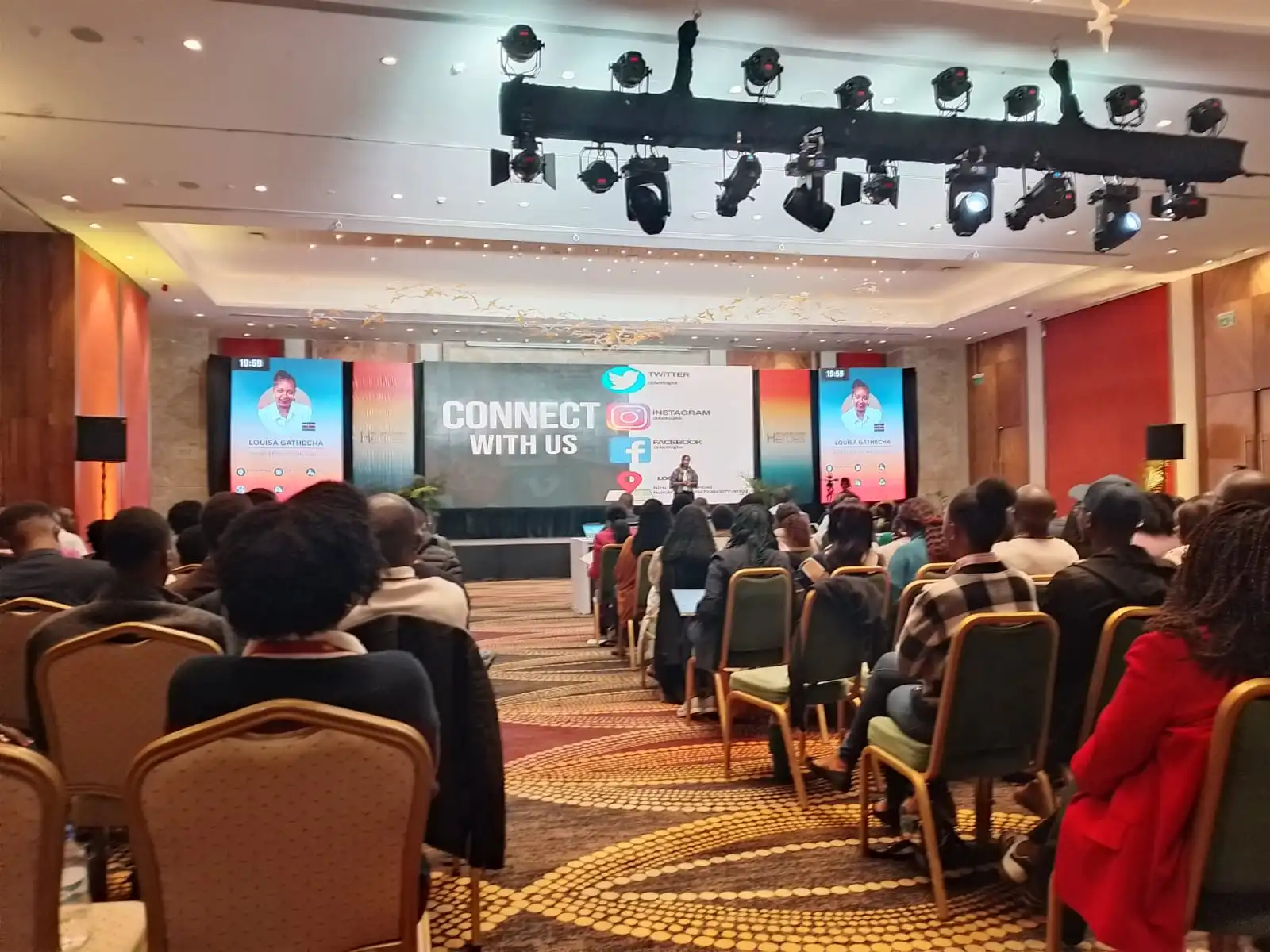
Then came the questions.
And the tone changed.
The judges were no longer listening only to the story. They were interrogating the business behind it.
Questions moved into customer concentration, competition, governance, capital requirements, impact measurement, market expansion, automation, energy consumption and the economics of the value chain.
Different investors, lenders, boards and corporate customers will naturally approach a business from different perspectives, but the underlying question is remarkably similar:
African Startup Funding: Boom, Correction, Stabilisation
Move through the years to see how Africa's venture funding environment changed from the 2021–2022 peak to the more selective market that followed.
Total funding
US$3.2B Equity + debtDeals
534 Recorded transactionsFunding direction
↓ 7% Year-on-yearThe correction slowed
African tech funding declined again, but only modestly compared with the sharp contraction of 2023. Capital remained available, although founders were operating in a significantly more selective environment than at the 2021–2022 peak.
of African equity funding in 2024 was concentrated in the continent's four largest venture markets: Nigeria, Egypt, Kenya and South Africa.
Kenya led African startup debt funding in 2024, illustrating how the funding mix can shift even when equity becomes more selective.
Source: Partech Africa Tech Venture Capital Reports, 2021–2024. Funding figures include equity and debt as reported by Partech. View source reports .
That funding backdrop matters. The market moved from extraordinary capital expansion in 2021 and 2022 into a sharp correction in 2023 and a more stable, but still materially more selective, environment in 2024.
That does not mean the funding correction caused judges to ask harder questions. But it does illustrate the broader environment in which founders now compete for capital. When money becomes more selective, the quality of the underlying business becomes harder to hide behind growth narratives or ambitious projections.
What the judges' questions reveal about a business
1. How concentrated is your customer base?
One of the risks raised during the questioning was customer concentration.
It is easy to present a large contract as evidence of success. And it is. But the same contract can simultaneously represent significant business risk.
If one customer accounts for 40%, 60% or 80% of revenue, what happens if that customer leaves, renegotiates its contract or simply takes longer to pay?
The headline revenue number does not tell you that.
A business can therefore be growing while becoming more vulnerable. Entrepreneurs should know not only how much revenue they generate, but exactly where that revenue comes from.
2. Are you creating jobs, or automating them away?
Another interesting question concerned the relationship between employment and automation.
This is particularly relevant in Africa, where businesses are often evaluated partly through their employment impact. But businesses also need productivity.
Technology can automate processes, reduce costs and allow companies to scale without increasing headcount proportionately.
The better question is therefore what automation is actually doing. Is it eliminating low-productivity tasks? Allowing existing employees to produce more? Replacing jobs entirely? Or creating different, potentially higher-skilled jobs elsewhere in the business or value chain?
3. Who actually benefits from the value you create?
The judges also explored how earnings are distributed across the value chain and the extent to which participants within that chain are becoming formalised.
This matters particularly for businesses built around networks of farmers, merchants, drivers, agents, suppliers, artisans or other independent participants.
A company may be growing rapidly. But what is happening one layer below the company?
Are suppliers earning more? Are previously informal participants becoming formal businesses? Are they building financial histories? Are margins being disproportionately captured by the platform sitting in the middle?
4. How energy-smart is the business?
Energy consumption also came into the discussion.
That can appear operational, but depending on the business model it affects cost, scalability and resilience.
How much energy does the operation require? How efficiently is it being used? What happens when prices increase? Can the model operate reliably in markets with less dependable infrastructure?
For many African businesses, energy efficiency is not merely an environmental question. It is a unit-economics question.
5. Who are your competitors, really?
Every entrepreneur knows the competition question is coming.
The weaker answer is: "We do not really have competitors."
Almost every business competes with something. Sometimes the competitor is another company. Sometimes it is an informal provider. Sometimes it is an internal process performed by the customer. And sometimes the real competitor is simply doing nothing.
Understanding the competitive landscape requires more than listing companies offering similar products. You need to understand why customers choose you, why they might leave you and how easily somebody else can reproduce what you have built.
6. What's your moat?
A good product is not necessarily a defensible business.
If somebody with more capital can reproduce your product in six months, what exactly are you protecting?
Your moat might be proprietary technology. But it might also be distribution, data, licences, network effects, brand, customer relationships, operational know-how, switching costs or exclusive partnerships.
The important thing is knowing what it actually is.
Then comes the harder question: how are you strengthening it?
7. Who independently validates your impact?
This was one of the questions I found particularly important.
Entrepreneurs increasingly talk about impact: jobs created, farmers supported, students trained, carbon reduced, income increased and communities reached.
But there is a significant difference between reported impact and verified impact.
Who measured it? What methodology was used? What was the baseline? Can the outcome actually be attributed to the intervention? Can somebody outside the company reproduce or validate the result?
The larger the claim becomes, the more important independent validation becomes.
8. How do you decide which markets to enter?
Expansion across Africa makes for an attractive growth story.
"Entering five countries" sounds impressive.
But why those five?
Market selection should ideally follow a deliberate framework: market size, customer demand, regulation, competition, distribution, political and currency risk, cost of entry, availability of partners, infrastructure, talent and expected return on invested capital.
The number of countries you operate in is not necessarily evidence of scalability. Sometimes it is evidence of complexity.
9. Is your governance keeping pace with your growth?
Corporate governance also surfaced during the questioning.
When a business is small, decision-making is often concentrated in the founder. That can be efficient.
But as capital, employees, shareholders, customers and regulatory exposure increase, governance has to mature with the business.
Who challenges management? Who approves major decisions? Are financial controls independent? Are related-party transactions properly managed? Is there a functioning board? What happens if the founder is unavailable?
Growth without corresponding governance creates risk.
10. Why exactly do you need external capital?
This may have been one of the most commercially important questions.
Entrepreneurs are frequently encouraged to raise money. But raising capital is not itself an achievement. Capital has a purpose.
If you are asking for debt or equity, you should be able to explain precisely what the money will do.
Buy equipment? Finance working capital? Enter another market? Hire a sales team? Develop technology? Acquire customers? Increase production capacity?
Then comes the next question: what economic return does that investment generate?
Debt needs repayment. Equity means surrendering ownership. Neither should be taken simply because it is available.
11. Where is the actual value addition?
This question cuts through a lot of business language.
What does the company actually do that makes the product, service or transaction more valuable?
Does it transform something? Reduce risk? Improve quality? Create convenience? Lower costs? Provide information? Aggregate fragmented supply? Open access to markets? Increase productivity?
The clearer that answer is, the easier it becomes to understand why customers should pay the business and why the business deserves to exist in the value chain.
The pitch is only the beginning
By the time entrepreneurs reach the Africa's Business Heroes semi-finals, they have already undergone layers of assessment before stepping onto the stage.
That changes the nature of the public Q&A.
The entrepreneur is not simply being asked to tell a compelling story. They are being asked to defend one.
What percentage of revenue comes from your largest customer?
What happens if that customer leaves?
Why are your margins where they are?
Who is your strongest competitor?
Why can they not easily copy you?
Why are you entering that particular country?
What will the capital you are raising actually achieve?
How independently verifiable are your impact claims?
Where does your value chain make its money?
What happens to the company without you?
My takeaway from the ABH Semi-Finals
The production at Emara Ole-Sereni was impressive: professional, well coordinated and very well executed.
But what stayed with me was not the stage.
It was the questioning.
Because beneath all the language we use around entrepreneurship, innovation, disruption and impact, eventually every serious business has to withstand scrutiny.
A compelling founder can get people's attention. A strong pitch can open a door. But neither substitutes for understanding the business.
Know your numbers. Know your risks. Know your market. Know why customers choose you. Know why you need capital. Know where your impact comes from. Know what makes the business defensible.
And be prepared for somebody to challenge every one of those assumptions.
That may be the real test of whether a business is ready for its next stage.
BizInfo Africa Business Tools
Funding conditions change. Business fundamentals still matter.
Explore the BizInfo Africa Business Confidence Index for a structured look at the practical factors that influence business resilience, operating strength and commercial confidence.
Africa's Business Heroes programme information: Africa's Business Heroes .
Funding data: Partech Africa Tech Venture Capital Reports, 2021–2024. Partech Africa Reports .
Event observations and photographs are from the author's attendance at the Africa's Business Heroes 2026 Semi-Finals in Nairobi.