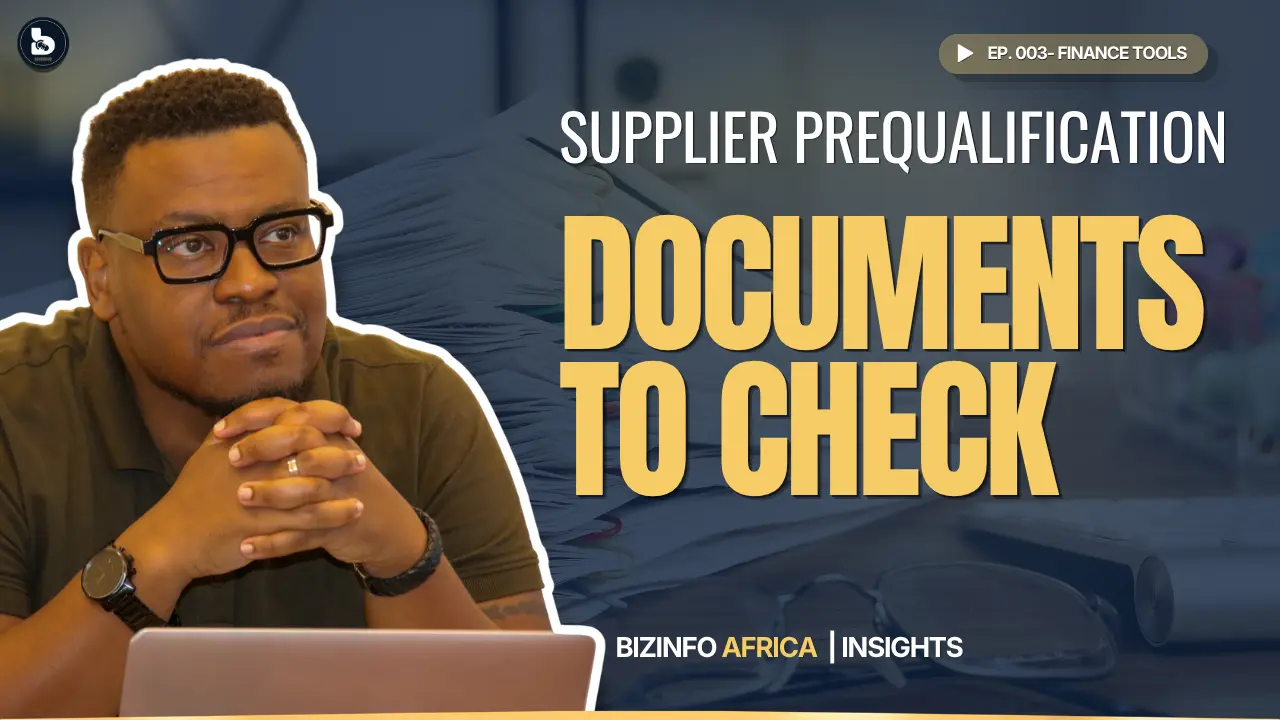
A bid can fail before anyone looks at your price. A missing certificate is enough.
There is no single universal supplier-document list in Kenya. Requirements depend on the buyer, procurement method, tender and contract. Common categories include business registration, tax compliance, ownership or eligibility evidence, financial information, technical capability and buyer-specific forms. The safest approach is to compare the actual solicitation or onboarding checklist with your current documents before the deadline.
There's no single supplier-document list in Kenya. What you need depends on the buyer, the procurement method and the tender, so the buyer's own tender or onboarding checklist is the document that controls. The categories do repeat: business registration, tax compliance, ownership or eligibility evidence, financial information, technical capability and buyer-specific forms. A missing certificate, or a business detail that doesn't match across documents, can end your bid before price is even compared.
Government, corporate and bank panels ask different things
For public tenders, start with the tender document and the Public Procurement and Asset Disposal Act framework.[1] If you're counting on AGPO, remember that eligibility is a separate question from supplier registration. AGPO is the programme for eligible enterprises owned by youth, women and persons with disabilities, so check the official requirements[2] instead of assuming you qualify. Kenya's e-GP system handles supplier registration and electronic participation,[3] so sort out any account problems well before the deadline. Corporate buyers and bank panels run their own onboarding, often with their own forms.
Paperwork also affects when you get paid. People Daily reported that some retail payment delays were caused by supplier documentation arriving late.[5] A clean pack doesn't guarantee an award or on-time payment, but it removes one avoidable risk. Due diligence cuts both ways: while you're being checked, it's worth checking the buyer too, especially when the contract is large.
Use the Procurement Readiness Checker as a five-minute self-audit. Pick your buyer type, tick what you hold, note what's missing or about to expire, then compare each gap with the buyer's real requirements before treating the list as complete. Fix the gaps first, then decide whether the contract justifies deeper checks on the buyer.
Close the document gaps first. Then check whether the counterparty and the exposure justify deeper diligence.
Request your verified reportExplore the toolsCommon questions
What documents are needed for supplier prequalification in Kenya?
Requirements vary by buyer. Common categories include registration, tax compliance, ownership or eligibility evidence, financial information, technical capability and buyer-specific forms.
What documents are commonly required for government tenders in Kenya?
The actual tender document controls. Public procurement may require registration, tax compliance, declarations, bid forms, technical evidence and other tender-specific documents.
What is supplier vendor onboarding?
It is the process a buyer uses to collect and validate information needed to approve a supplier for purchasing and payment.
Does every buyer require the same supplier documents?
No. Corporate, government, bank and sector-specific procurement processes can use different eligibility, risk and documentation requirements.
What is AGPO in Kenya?
AGPO is the Access to Government Procurement Opportunities programme for eligible enterprises owned by youth, women and persons with disabilities. Eligibility and current requirements should be checked on the official AGPO source.
Sources
- Primary law Public Procurement and Asset Disposal Act, 2015
- Official programme AGPO FAQs
- Official procurement system e-GP Kenya supplier registration
- Official guidance PPRA, Kenya procurement resources
- Secondary reporting People Daily, supplier documentation and payment delays
Sources and figures checked 2 October 2026. Verification services by ASAP Information Services Ltd.